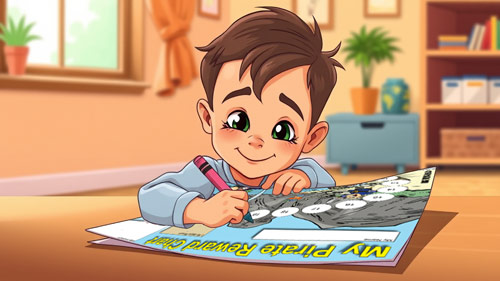
Fundamentally reward charts (or behavior charts) are tools for behavior management or behavior modification whereby a child is awarded stickers or other rewards for behaving well. This is a process of positive reinforcement and can be a very powerful tool in changing behavior. Reward charts won’t magically fix all bad behavior or make our children suddenly start behaving well, but think of it as adding a powerful weapon to your parenting arsenal.
Reward charts for children can help to:
- encourage new behaviors or habits
- change or shape behavior
- stop bad or inappropriate behavior
- improve existing behaviors
- change habits
- introduce healthy habits
- set goals
- …and so on.
Why our reward charts are unique and so powerfully effective
- Our reward charts come in a variety of different themes suitable for boys and girls of most ages up to the pre-teen adolescent (different strategies may need to be considered for the older children such as a token economy and behavior contracts).
- Your children can write their name on the behavior chart, and in the case of the 20 stickers charts they have a special space to write what they’re working on (the behavior or task), also their bronze reward, their silver reward and their “big” gold reward. We believe this really gives a sense of “ownership” over the rewards chart, and it offers an on-going incentive or rewards in smaller stages before they reach the ultimate goal of the behavior chart.
- Our reward charts for children vary in the number of sticker spaces to be filled, according to the age and development of the child. For example some reward charts need 10 reward stickers to complete, while others need 20 reward stickers. The reward charts are designed so that a child will experience a smaller reward earlier in the use of the chart, before an increased ‘stretch’ to reach the ultimate reward. After tasting this early success, children are more likely to concentrate their efforts on reaching the final goal of their rewards chart.
- With the 10 sticker reward chart a child will reach the Silver star after 5 reward stickers and the Gold star after 10 reward stickers. Generally these reward charts are used with toddlers and younger children and the “reward” of gaining a smiley sticker or a star sticker is all that is required. Of course other rewards may be offered on reaching the silver and gold stars, and these could be recorded and stored separately.
- With the 20 sticker reward charts, the child will reach the Bronze star (and a smaller reward) after 5 reward stickers, the Silver star (and another smaller reward) after 10 reward stickers, and the Gold star (and ultimate or “big” reward) after 20 reward stickers.
- We have found through hours and hours of testing and relentless trial and error that the format of our reward charts (smaller reward, leading to smaller reward, leading to larger reward) offers a fantastic chance to maintain a child’s interest in the reward chart. Of course this leads to a greater chance of success for your children.
Using your reward charts successfully
- Our behavior charts are designed to have your child be involved in all aspects of using the behavior chart.
- This can include brainstorming for possible rewards (with your guidance and final say of course).
- Discuss with your child (when calm and controlled) possible behavioral goals that may need to be addressed or other such goals (for example, improved homework practices, brushing teeth etc).
- Get your child to write their name, their goal behavior (or task, etc) and their rewards for completing the behavior chart, on the laminate coated reward chart with the marker included in the reward chart pack.
- When your child does what they have committed to (as written on their rewards chart), award them with a sticker to place on the rewards chart. It’s a great visual incentive for your child to see their progress towards their goal reward.
- When your child has filled in all the reward stickers spots on the reward chart, then they can be awarded their reward. They have earned it!
- At this stage the reward charts can be wiped cleaned, the reward stickers removed, and a new reward chart can be started.
- Please consider also that the more involvement children have in the preparation toward the use of the reward charts, the more of a sense of “ownership” your child will have over the reward chart or behavior chart and the process of using it. We have found that this can often be the missing link leading toward the success of using reward charts. (Of course this involvement may be determined by your child’s age and level of development)
Reward charts are not the answer to all of your parental challenges (and shame on anyone who says they will be) but used wisely and well, and coupled with effective praising, they really can offer us parents a proven effective, and very powerful strategy of behavior management. If you choose to buy our reward charts, or if you decide to make your own kids charts, remember the key is always to Be Positive, Be Consistent, Be Realistic and Be Fair. (Check out our reward chart rules)